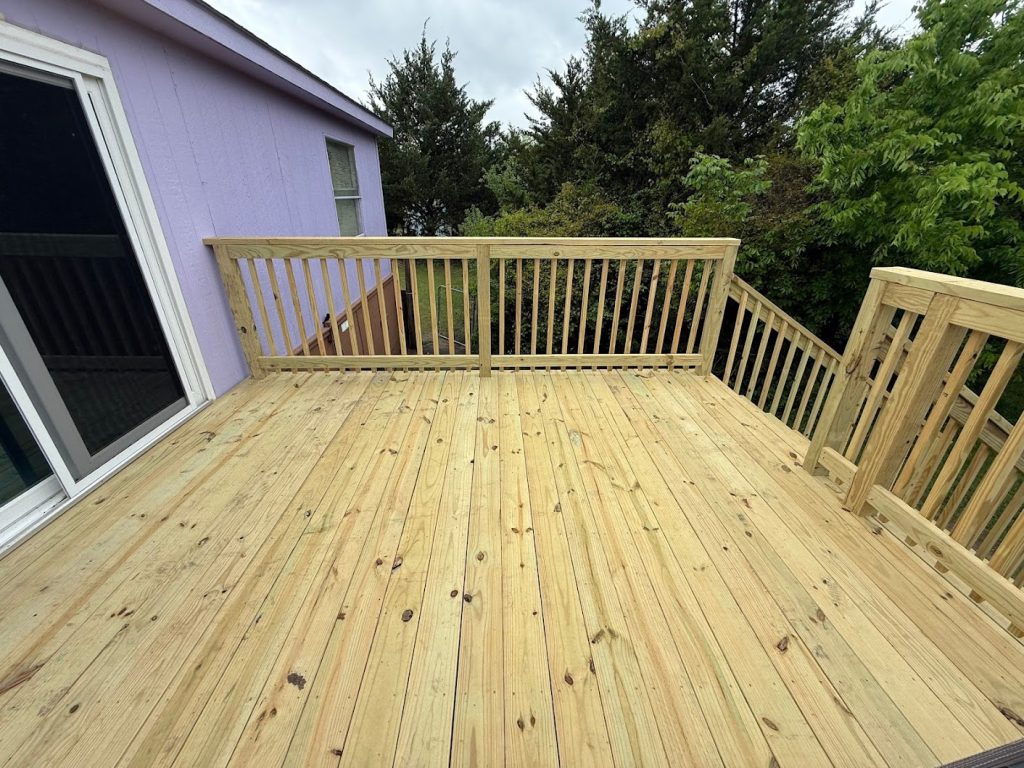
Home improvement studies consistently show that a well-built deck can return up to 70–80% of its cost in added home value, but only if it is designed and installed for long-term durability. In North Texas, where blazing sun, sudden storms, and temperature swings are part of everyday life, the difference between a deck that lasts three years and one that lasts three decades usually comes down to the quality of the installation. Materials matter, but how those materials are selected, fastened, supported, and protected matters even more.
Durable deck installation for outdoor living is not just about putting boards on posts; it is about creating a permanent extension of your home that can handle heavy foot traffic, family gatherings, grilling, and weather exposure season after season. For homeowners in Sherman, TX, that means planning for intense UV exposure, clay-heavy soils that move, and humidity that can attack unprotected wood and metal. A deck that is thoughtfully engineered for these conditions becomes less of a weekend project and more of a long-term investment in comfort, safety, and curb appeal.
Lowery Fence & Patio has seen what happens when corners are cut: warped boards, wobbly railings, standing water, and support posts that shift or rot far too soon. By focusing on durability from the very first design sketch, a deck can be built to perform like an outdoor room, not a temporary platform. That requires attention to structure, materials, drainage, and details that many DIY guides gloss over. When each of those elements is handled correctly, your outdoor living space becomes a sturdy, low-maintenance backdrop for years of barbecues, quiet mornings, and Texas sunsets.
Designing For North Texas Conditions
Durable deck installation in Sherman starts long before the first hole is dug. The design phase is where future problems are either eliminated or accidentally built in. A good design begins with understanding how the space will be used: Will it support a heavy grill or outdoor kitchen? Do you plan to host large gatherings? Will there be a hot tub or heavy planters? Each of these choices affects the type of framing, joist spacing, and foundation needed to keep the deck safe and solid under real-world loads.
Local climate is another key design factor. Sherman, TX experiences hot summers, occasional winter freezes, and significant UV exposure. This combination can cause boards to expand and contract, fasteners to loosen, and finishes to fade prematurely if they are not specified correctly. A durable design accounts for these stresses with proper board spacing, movement gaps around posts and walls, and materials that are rated for high UV environments. Details like orienting boards to shed water and heat more efficiently may seem small, but they add up to a longer-lasting deck.
Orientation to the sun and wind also shapes durability. A deck that faces west may get brutal afternoon sun, which can dry and crack unprotected surfaces. Strategic use of shade structures, pergolas, or even partial roofing can reduce thermal stress on the decking and framing while making the space more comfortable. Similarly, acknowledging prevailing winds can help with railing design and the placement of stairs and access points so that your deck remains secure, safe, and pleasant to use all year.
Finally, a durable design in Sherman must respect the soil and topography. Many properties have subtle slopes, low spots where water collects, or clay soils that shift with moisture changes. Incorporating proper drainage, grading adjustments, and suitable footing depths into the design helps prevent future settling, standing water, and erosion that can undermine even the best-built deck.
Choosing Materials That Truly Last
Material selection is the backbone of a long-lasting deck. While pressure-treated lumber is a common and cost-effective choice for framing, not all treated wood is equal. It is important to specify lumber rated for ground contact where needed, and to ensure posts and beams have the correct treatment level for Sherman’s climate. For the visible deck surface, you might consider options like high-quality pressure-treated pine, cedar, composite decking, or PVC boards, each with its own strengths and required maintenance routines.
Wood decking, when chosen and protected properly, can be both beautiful and durable. Dense species and boards with fewer knots are less likely to warp or split. Applying the right protective coatings and keeping up with maintenance, similar in principle to Wood fence staining, can dramatically extend the life of wood surfaces by blocking moisture and UV damage. For many homeowners in Sherman, TX, this balance of natural appearance, cost, and maintainability makes premium wood a popular choice when installed correctly.
Composite and PVC decking have gained popularity for their resistance to rot, insects, and fading. These materials are engineered to handle UV exposure better than many untreated wood options, and they typically require less routine maintenance. However, they still rely heavily on a properly built substructure. If the framing underneath is undersized, improperly spaced, or exposed to constant moisture, even the best composite boards cannot compensate. Lowery Fence & Patio focuses on pairing these advanced decking materials with equally robust framing and fasteners to ensure the entire system ages gracefully together.
Fasteners and hardware are often overlooked but are essential for durability. In Sherman’s climate, galvanized or stainless-steel fasteners are critical to avoid rust, staining, and structural weakening over time. Hidden fastener systems can protect screw heads from weather, reduce splitting, and give the deck a cleaner look. Joist hangers, post bases, and connectors should also be corrosion-resistant and properly sized to handle loads. Investing in high-quality hardware from the start saves significant repair costs and safety concerns down the road.
Foundations, Framing, And Structural Integrity
A deck is only as durable as the structure that supports it. Proper foundation work begins with understanding soil conditions. In areas around Sherman, TX, expansive clay soils can swell and shrink with moisture, causing shallow footings to move. A durable installation uses footings that extend below the frost line and into stable soil, with concrete piers or footers sized to support the anticipated loads. This deeper, more robust foundation keeps posts stable and reduces the risk of sagging or tilting over time.
Post installation is another critical step. Posts should be properly anchored to footings using metal post bases or brackets that keep wood off the concrete, reducing the risk of rot where moisture tends to collect. When posts are buried directly in the ground or set incorrectly into concrete, they can wick moisture and deteriorate much faster. Lowery Fence & Patio pays particular attention to these connection points, knowing that they are often the first places to fail on poorly built decks.
Framing must be engineered for both strength and longevity. Joist spacing should match the decking manufacturer’s recommendations, which may vary for wood, composite, or PVC boards. Double or triple beams, properly bolted together and supported by posts at appropriate intervals, distribute weight evenly and prevent bounce or flexing. Blocking between joists can add rigidity and help keep boards aligned over time. In multi-level or larger decks, additional beams, posts, and bracing may be needed to prevent sway and ensure the structure feels solid underfoot.
Attachment to the home, when applicable, is particularly important. Ledger boards must be flashed and fastened correctly to prevent water intrusion into the house framing, which can cause serious damage over time. Using lag bolts or structural screws, along with high-quality flashing materials, creates a secure, watertight connection. Where a freestanding deck is more appropriate, additional posts and bracing replace that ledger connection to provide equivalent stability without compromising the home’s exterior.
Drainage, Ventilation, And Moisture Control
Water is one of the biggest threats to any outdoor structure, and Sherman’s mix of heavy downpours and humid days makes moisture management essential. A durable deck installation starts by ensuring water has somewhere to go. Slightly sloping the deck surface away from the house allows rain to run off instead of pooling. Gaps between deck boards must be sized correctly: wide enough to allow drainage and airflow, but not so wide that they become uncomfortable or unsafe. Improper spacing can trap water or debris, accelerating rot and creating slippery surfaces.
Under-deck drainage is just as important as surface runoff. If your deck sits low to the ground, there must be adequate clearance and ventilation to allow moisture to evaporate. Trapped moisture under a deck can lead to mold, mildew, and rot in the joists and beams, even if the top surface looks fine. Techniques like using gravel under the deck, incorporating drainage channels, or installing under-deck systems to redirect water away from the house can significantly increase the life of the structure.
Flashing and sealing around posts, ledger boards, and any penetrations through the deck surface are crucial in preventing water intrusion. Metal or vinyl flashing at the house connection, properly lapped and sealed, keeps water from sneaking behind siding or into framing. Caps or post sleeves can protect vulnerable end-grain areas from absorbing water like a sponge. These small details are often invisible once the deck is complete, but they play a huge role in long-term durability.
In areas prone to standing water or poor drainage, additional site work may be needed before deck installation. This can include regrading soil, installing French drains, or adding swales to guide water away from the deck area. Lowery Fence & Patio evaluates these conditions during planning so that the finished deck does not sit in a puddle every time it rains. Proper moisture control not only protects the deck materials but also makes the space more usable and comfortable throughout the year.
Safety, Comfort, And Everyday Durability
A durable deck must be safe as well as strong. Railings, stairs, and lighting all contribute to everyday usability and long-term performance. Railings need to be securely attached to the framing, not just the surface boards, to withstand the pressure of people leaning or children playing. Posts should be through-bolted or supported with strong brackets, and balusters spaced to meet safety standards while allowing airflow and visibility. Over time, a well-built railing system resists wobbling and loosening, which are common issues on decks that were not properly engineered.
Stairs are another point of wear and tear. Treads and risers must be evenly spaced, properly supported, and built with materials that provide good traction, especially when wet. Stringers (the supports under the steps) should be sized and spaced to avoid sagging as the deck ages. For homeowners in Sherman, TX who entertain frequently, stairs often see as much traffic as the main deck surface, so they must be built with the same attention to durability and safety.
Comfort features also influence how well a deck holds up. Shade structures, pergolas, and even simple awnings can protect decking from direct sun, reducing fading and cracking. Thoughtful placement of furniture and grills, along with heat-resistant pads or pavers under cooking areas, can prevent hot spots and stains. Incorporating durable, low-voltage lighting into steps and railings not only enhances evening ambiance but also reduces the risk of trips and falls, especially as surfaces age and textures change.
Routine use will always put some stress on a deck, but when the structure is designed for durability, everyday wear becomes manageable rather than catastrophic. Lowery Fence & Patio considers how families actually live—kids running, pets scratching, furniture being moved—and selects materials and layouts that can handle real life. That might mean choosing more scratch-resistant decking, reinforcing high-traffic areas, or planning for easy replacement of individual boards without disturbing the entire surface.
Maintenance Planning From Day One
Even the most durable deck installation benefits from a realistic maintenance plan. Durability does not mean “no maintenance”; it means “manageable, predictable maintenance that keeps the deck in top shape for many years.” From the beginning, homeowners in Sherman should know how often their deck will need cleaning, sealing, or inspection. Wood decks may require periodic staining or sealing to protect against UV and moisture, while composite decks typically need regular cleaning to remove dirt, pollen, and mildew.
Planning for maintenance includes designing the deck so it is easy to care for. This might involve ensuring there is enough clearance underneath to inspect framing, using removable access panels for hidden utilities, or choosing railing styles that are easier to clean. Smooth transitions and well-thought-out edges also reduce spots where debris can accumulate. When Lowery Fence & Patio designs a deck, they keep future upkeep in mind so that homeowners can protect their investment without constant hassle.
Periodic inspections are part of a durable deck strategy. Checking for loose fasteners, small cracks, early signs of rot, or movement in railings allows for minor repairs before they become major issues. In Sherman’s climate, it is wise to perform these inspections at least once a year, ideally after the harshest season. Simple tasks like tightening screws, replacing a damaged board, or reapplying sealant in high-wear areas can significantly extend the life of the entire structure.
By combining high-quality materials, solid construction, and a clear maintenance routine, a deck transforms from a short-term project into a long-term asset. Homeowners can enjoy their outdoor living space with confidence, knowing that each season of use has been anticipated and planned for. This proactive approach is at the heart of durable deck installation and is central to the way Lowery Fence & Patio serves the Sherman, TX community.
Frequently Asked Questions
How long should a properly installed deck last in Sherman, TX? With quality materials, proper installation, and routine maintenance, a well-built deck in Sherman can last 20–30 years or more. Wood decks may require more frequent sealing and inspections, but when protected from moisture and UV damage, they hold up surprisingly well. Composite and PVC decks can offer even longer surface lifespans, provided the substructure is built to the same high standard. The key is combining good design, solid framing, and consistent care suited to North Texas weather.
What decking material is best for durability in this climate? There is no single “best” material for every situation, but some options perform especially well in Sherman’s sun and humidity. High-quality pressure-treated lumber, when properly sealed and maintained, offers a strong, cost-effective solution. Cedar provides natural resistance to decay and insects, along with a warm appearance. Composite and PVC decking excel in low-maintenance durability, resisting rot and fading better than many woods. Lowery Fence & Patio typically recommends a material after considering budget, desired appearance, maintenance expectations, and how intensely the deck will be used.
How important is the foundation to deck durability? The foundation is critical; it is the difference between a deck that stays level and one that shifts, sags, or pulls away from the home. Properly sized concrete footings, set at the right depth and spaced correctly, ensure that the deck can handle weight and soil movement. In Sherman, where clay soils can expand and contract, deeper, well-engineered footings are essential. Skimping on foundation work may not show immediately, but over time it often leads to expensive structural repairs or even complete rebuilds.
Do I need a permit for a new deck in Sherman, TX? In many cases, yes. Decks above a certain height, attached to a home, or exceeding specific size thresholds typically require permits and inspections. These requirements help ensure that the structure meets safety and building code standards. Working with a professional like Lowery Fence & Patio means the permitting process is handled correctly, with plans and construction that satisfy local regulations. This not only protects your investment but can also be important if you ever choose to sell your home.
How can I keep my deck looking good year after year? Keeping your deck looking its best involves a combination of regular cleaning and periodic protective treatments. Sweeping away leaves and debris, washing the surface with appropriate cleaners, and addressing spills quickly will prevent staining and mildew. For wood decks, applying a quality stain or sealer every few years helps block UV rays and moisture. Composite decks benefit from gentle cleaning to remove dirt and growth. Annual inspections to tighten fasteners and replace any damaged boards round out a simple routine that preserves both appearance and structural integrity for the long term.