
Outdoor living patio builder vs DIY planning comparison
If you are picturing a covered patio and a smoother backyard flow in Sherman, TX, you might also be wondering what DIY planning can realistically handle. This guide breaks down where professional patio building helps most, where DIY can work, and how to avoid planning gaps that show up after materials are already ordered.
You start with a simple idea: “We will add a patio cover, maybe extend the slab, and build a place for weekend dinners.” Then the questions pile up fast. What size should it be? How do you align it with gates, walkways, and the way people actually move through the yard?
In Sherman, TX, outdoor projects also have timing pressure. Summer heat, heavy rain days, and the way wind moves across open yards can make a small planning mistake feel bigger by week two. The difference between a patio that looks right and one that performs well often comes down to planning details that are easy to overlook.
Quick Answer
DIY planning can be a good fit for a basic uncovered slab extension or a straightforward layout you can fully measure and stage yourself. For a covered patio that needs solid anchoring, good drainage planning, and clean integration with outdoor access, a builder-led approach usually saves time and rework. A practical middle ground is to DIY the “vision” and measurements, then have a patio professional confirm layout, structural assumptions, and how the finished space will connect to fencing, gates, and walkways.
What to Check First
Before you choose between a patio builder and DIY execution, map your yard’s movement patterns. Think about where foot traffic starts and ends, where you want deliveries and grill access, and where people naturally pause. Patio projects often fail at the planning stage when the cover location blocks a gate swing, a walkway ends too close to posts, or the patio edge makes seating feel cramped.
Measure “function,” not just dimensions
Confirm clearances for doors, gates, and common paths. A patio cover can look fine on paper but become inconvenient if it interferes with access control or seasonal use.
Decide the coverage level early
Full cover, partial cover, or shade sail plans change how you plan posts, roof pitch, and how you protect outdoor surfaces during rain days.
Plan for how the patio “pairs” with fencing
If you already have fencing or plan to upgrade it, your patio layout should match gate placement and privacy lines so the finished yard feels intentional.
Main Things Customers Should Understand
The biggest difference between “builder” and “DIY” is how much of the risk gets pushed into planning. When professionals build patios, they typically coordinate the structural decisions, site considerations, and finishing details so fewer problems show up after the cover and posts are already in. With DIY, it can be tempting to solve issues later, but outdoor projects usually punish guesswork.
Professional observation: Outdoor living projects in Sherman yards often need coordination between patio layout and access points, especially when gates and privacy fences are part of the same upgrade plan.
Builder-led patio planning: what you gain
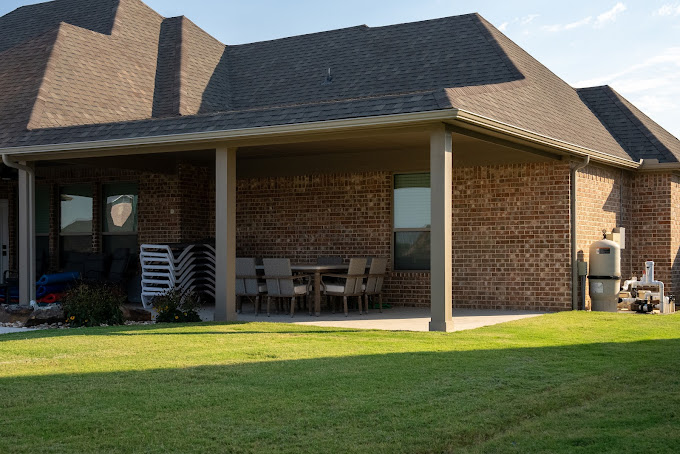
A patio builder can help you confirm how the cover will work with your yard’s constraints and how the finished space supports daily routines. That includes post placement that keeps walkways usable, cover positioning that supports shade where you actually sit, and a layout that works alongside fencing upgrades.
DIY planning: where it can work well
DIY planning tends to do best when your scope is limited and your layout is straightforward. If your project is primarily positioning furniture, defining seating zones, or planning a simpler cover that does not require as much structural coordination, you may be able to execute with fewer unknowns.
DIY planning: where it gets expensive
The most costly DIY surprises usually come from changes made after materials are ordered or after the first round of layout is already staked. Common examples include moving gate locations after you realize the cover blocks access, reworking edges because drainage paths do not match your yard, or replacing fencing components because post placement conflicts with an existing line.
Practical integration tip: If you are also planning fencing, consider aligning your patio and gate plan together so the yard feels cohesive rather than “patched” between phases.
Why This Matters in Sherman, TX
Sherman, TX outdoor spaces can be exposed, and that means your patio cover and yard access both need to perform through real weather days. If you plan DIY first and decide later you want privacy fencing or a different gate setup, you can end up with awkward transitions where seating, walkways, and fence lines do not meet cleanly.
| Planning category | DIY planning tends to be best for… | Builder-led planning tends to be best for… |
|---|---|---|
| Layout and yard flow | Simple, open layouts where gates and paths are already finalized | Projects that must coordinate patio edges with gate placement and fencing lines |
| Coverage and protection | Light shade concepts where structural decisions are minimal | Covered patios that require careful support planning and clean water management |
| Coordination with fencing | When fencing is already installed and post locations are not changing | When you want to pair the patio upgrade with fence installation, repairs, or access control |
| Finishing details | Cosmetic steps you can adjust later without affecting structure | Finishes that need alignment across patio, posts, and surrounding outdoor features |
Want a patio layout check before you commit?
Share your yard goals and we can help you think through how a patio cover plan may affect access points and outdoor flow around Sherman, TX. If you are also considering fencing upgrades, we can help you keep the phases aligned.
Explore custom patio coversCommon Mistakes to Avoid
DIY planning often starts strong, then slips on details that feel small until the patio is built. Here are the mistakes we see most when homeowners try to translate a Pinterest-style concept into a usable backyard space.
- Blocking gate access by placing posts or cover edges where a driveway gate or walk gate needs to open freely.
- Ignoring how seating changes traffic so people end up walking through a narrow corner instead of using a clear path.
- Underestimating the fence and patio “handshake” where privacy lines, ornamental features, and patio edges meet.
- Planning the cover first without checking the yard edges so the patio boundary forces awkward transitions to existing fencing.
- Waiting to coordinate finishing like staining or protective treatments until after layout decisions are locked in.
Customer Checklist
Use this checklist to decide whether DIY planning is ready to move forward or whether you should bring in a builder for a confirmation pass. It is designed to help you catch the issues that affect comfort, access, and long-term usability.
- Confirm your entry points: driveway gate location, walk gate location, and the path people will use daily.
- Mark post zones on the ground and test a “walk-through” with normal movement and furniture placement.
- Identify where privacy matters most so your patio and fence line support the same goal.
- Plan your exterior finishes sequence so treatments and protective steps match the project order.
- Check matching materials if you are pairing fencing upgrades, such as wood, chain link, or wrought iron, with your outdoor living plan.
- Decide the right next step: DIY for measurement and layout, builder confirmation for structural and integration choices.
Representative scenario
A homeowner in Sherman starts by planning a covered patio for weekend grilling and dining. They install the patio cover layout first using DIY measurements, then later decide they want a privacy fence upgrade to make the backyard feel more enclosed. When the fence line is finalized, they realize the gate and fence transition do not line up with the patio edge the way they expected. This often leads to rework. A better approach is to align patio post placement and gate access planning with the fencing plan from the beginning.
Frequently asked questions
These are the questions customers in Sherman, TX and nearby counties ask most when comparing patio building options and DIY planning. If your situation is similar, use these answers to tighten your plan before you spend time or money on materials.
Can DIY planning work if I already have fencing installed?
What should I coordinate with my patio plan if I’m updating gates?
How does choosing a fence material affect outdoor living planning?
Should I plan patio cover details at the same time as staining?
Do I need a builder if my patio is mainly for shade?
Ready to make the patio plan practical?
If you want help aligning a patio cover concept with yard access, fencing, and finishing steps around Sherman, TX, reach out. We will focus on getting your plan into a shape that is easier to build and easier to live with.
Call Lowery Fence & Patio
About Lowery Fence & Patio
Lowery Fence & Patio provides fencing and outdoor living support in Sherman, TX and nearby areas including Collin County, Grayson County, Cooke County, and Fannin County. From residential and commercial fencing to custom patio covers and related outdoor upgrades, we help homeowners and property managers plan projects that work as a complete backyard system.